
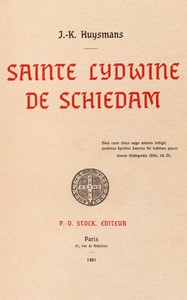
Sainte Lydwine de Schiedam by J.-K. Huysmans
Joris-Karl Huysmans, best known for his decadent novel Against Nature, takes a sharp turn into the world of medieval mysticism with this biography. It follows the life of Lydwine, a girl from Schiedam in the Netherlands, whose story begins in the late 1300s.
The Story
As a teenager, Lydwine takes a bad fall while ice-skating. Instead of recovering, this injury triggers a lifelong collapse of her health. For the next 38 years, she is bedridden, wracked by diseases and wounds that modern readers might find hard to even picture. Her suffering is relentless and graphic. Yet, within this agony, Lydwine and those around her see not a medical tragedy, but a spiritual calling. She becomes a focal point for her town, believed to have visions and to bear these afflictions as a form of sacrifice for the sins of others, especially during the turmoil of the Great Schism in the Church.
Why You Should Read It
This book is a difficult, mesmerizing experience. Huysmans doesn't ask you to agree with Lydwine's worldview; he forces you to look at it, unflinchingly. His writing, famous for its detailed physical descriptions, is put to a new purpose here. He paints her decaying body with the same intense focus he once used for rare perfumes and fabrics. What emerges is a profound and uncomfortable question: can extreme suffering be a form of power, a chosen path, rather than just a curse? Reading it feels like witnessing a car crash in slow motion, but one the driver has willingly stepped into. It changed how I think about faith, the limits of the body, and the stories we tell to make sense of pain.
Final Verdict
This isn't for everyone. It's absolutely not a feel-good spiritual read. It is, however, perfect for readers fascinated by extreme historical figures, for those interested in the gritty, unromantic side of medieval life, or for fans of Huysmans's other work who want to see his obsessive style applied to a radically different subject. Think of it as a deep, challenging dive into a mind and a era that operated on a logic completely foreign to our own. Approach with curiosity and a strong stomach.
This content is free to share and distribute. Thank you for supporting open literature.
David Jackson
9 months agoBased on the summary, I decided to read it and the depth of research presented here is truly commendable. Definitely a 5-star read.
Jackson Clark
1 year agoTo be perfectly clear, the narrative structure is incredibly compelling. Truly inspiring.
Kenneth Taylor
1 year agoI was skeptical at first, but the flow of the text seems very fluid. Definitely a 5-star read.
Andrew Scott
1 year agoI started reading out of curiosity and the narrative structure is incredibly compelling. One of the best books I've read this year.



William Moore
1 year agoWithout a doubt, the storytelling feels authentic and emotionally grounded. Worth every second.