
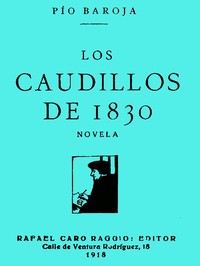
Los Caudillos de 1830 by Pío Baroja
Pío Baroja’s Los Caudillos de 1830 pulls back the curtain on a chaotic period in Spanish history. We follow a group of liberal exiles and conspirators as they try to overthrow the absolute monarchy of Ferdinand VII. The story isn't a straight march to victory; it's a fragmented, often confusing journey through secret meetings, failed plots, and shifting loyalties across the French border.
The Story
The plot centers on Aviraneta, a cunning and pragmatic political agent (based on a real historical figure). He’s not a dashing hero, but a man who gets things done in the shadows. The book jumps between different characters and locations, showing us the disorganized world of liberal conspiracies. We see their arguments, their fleeting triumphs, and their constant setbacks. The promised revolution of 1830 becomes less about grand ideals and more about the personal ambitions and petty conflicts of the men trying to lead it.
Why You Should Read It
Baroja doesn't give you easy answers. His writing is sharp and direct, with a cynical eye for human weakness. The characters feel authentic because they are flawed—brave one moment, vain or selfish the next. What stuck with me was how familiar it all felt. The political maneuvering, the clash between theory and action, the way movements can be undermined from within—it reads like a dispatch from any turbulent political moment. It’s history without the polish, which makes it incredibly compelling.
Final Verdict
This book is for readers who love character-driven historical fiction that prioritizes truth over myth. It’s perfect for history buffs tired of simplistic narratives, or for anyone fascinated by the gritty mechanics of power and rebellion. If you enjoy authors who show the unglamorous side of big events, like Émile Zola or Benito Pérez Galdós, you’ll find a kindred spirit in Baroja. Be prepared for a novel that’s more about psychological and political realism than a tidy, action-packed plot. It’s a challenging, intelligent, and deeply rewarding look at the birth pangs of modern Spain.
This book is widely considered to be in the public domain. It is now common property for all to enjoy.
Jackson Gonzalez
7 months agoGreat read!
Mary Wilson
9 months agoI was skeptical at first, but the content flows smoothly from one chapter to the next. Worth every second.
Donald Johnson
1 month agoThe layout is very easy on the eyes.
Mary Smith
1 year agoSimply put, the clarity of the writing makes this accessible. Exceeded all my expectations.
Noah Robinson
1 year agoJust what I was looking for.