
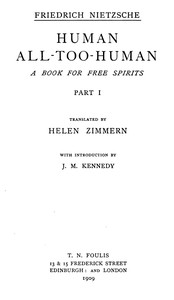
Human, All-Too-Human: A Book for Free Spirits, Part 1 by Nietzsche
Forget what you think you know about philosophy books. 'Human, All-Too-Human' isn't a single, dense argument. It's a collection of over 600 short passages, like intellectual grenades tossed at conventional wisdom. There's no traditional story with characters. Instead, the 'plot' is the journey of a mind breaking free. Nietzsche acts as a guide, leading us on a tour of human psychology, morality, art, and religion. He picks apart our motivations, showing how things we call 'virtue' or 'genius' or 'love' often have much more ordinary, and sometimes selfish, roots.
The Story
The 'story' here is the process of waking up. Nietzsche systematically questions why we believe what we believe. He looks at religion and says it grows from fear and need. He examines morality and suggests it often comes from weakness, not strength. He talks about art and artists, stripping away the myth of pure inspiration. Each short section is a step in dismantling the grand illusions we live by. The narrative arc is the movement from being a passive believer to becoming what he calls a 'free spirit'—someone who thinks for themselves, without the crutch of dogma or tradition.
Why You Should Read It
I'll be honest: some parts made me uncomfortable. When he suggests our pity for others can be a form of vanity, or that our drive for truth might be a hidden drive for power, it forces you to check your own motives. That's the book's power. It's not about agreeing with every point Nietzsche makes (I certainly don't). It's about the exercise of radical honesty it demands from you as a reader. It sharpens your mind. You start to see the 'human, all-too-human' behind grand statements in politics, art, and everyday life. It's liberating, in a scary kind of way, to question the foundations of your own thoughts.
Final Verdict
This book is perfect for curious readers who feel a nagging sense that the world's operating manual might be flawed. It's for anyone who loves psychology, enjoys a good intellectual challenge, or is just tired of shallow takes. You don't need a philosophy degree—just a willingness to think. If you enjoyed the skeptical eye of writers like Christopher Hitchens or the psychological insights of a novel like Dostoevsky's, you'll find a fascinating (and more concise) friend in Nietzsche here. Give it a try. Your mind will thank you for the workout.
This historical work is free of copyright protections. Access is open to everyone around the world.
Amanda Jackson
1 year agoHonestly, the emotional weight of the story is balanced perfectly. A true masterpiece.

Ava Lopez
6 months agoCitation worthy content.